Aga Kebab
BackAga Kebap in Celje: An Analysis Between Tradition and Contemporary Criticism
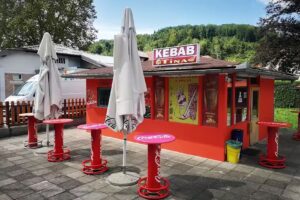
Aga Kebap on Ljubljanska cesta 6 in Celje is not just another fast food joint; it is an institution with over twenty years of history that has marked the culinary landscape of the city. For many Celje residents and visitors, this place has been synonymous with the best kebab in the region for many years, as confirmed by some of the reviews that have given it a star rating. However, recently, increasingly vocal critics have emerged, painting a much different picture. This gap between reputation and current experience places the place at an important crossroads, and potential customers face a dilemma: does Aga Kebap still offer the top-notch culinary experience for which it is famous?
Foundations of success: Tradition and meat quality
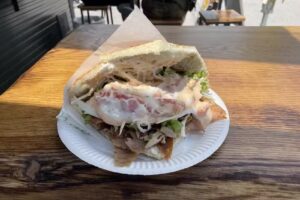
The central pillar on which Aga Kebap built its reputation, according to long-time customers, was primarily the quality of the meat preparation. In a world where most kebab providers use pre-prepared and industrially processed meat rolls, Aga Kebap is said to be distinguished by its use of real, whole pieces of meat, stacked on top of each other. This traditional preparation method, where the meat is cut directly from a rotating skewer, ensures juiciness, authentic taste and texture that is incomparable to processed alternatives. It is this detail that was key to the establishment gaining a loyal customer base, who considered it the only right choice for kebab in Celje . The opinion of one of the reviewers, emphasizing "kebab with tradition, for over 20 years", is not just a nostalgic memory, but a testament to an era when quality set the standards.
This reputation for excellence was complemented by friendly service, which even some critics of today's offerings praise. The homely feel and quick preparation contributed to a holistic experience that went beyond simply satisfying hunger. For many, a visit to this restaurant in Celje was a ritual – a reliable spot for delicious food after a busy day or during a night out.
Modern offering: Accessibility and expanded menu
Today, Aga Kebap is betting on proven trump cards that are key for the modern consumer: accessibility and convenience. One of the strongest arguments for visiting is certainly their opening hours. While many doors close, Aga Kebap remains open late into the night, on Fridays and Saturdays even until 2 am. This puts it in an ideal position for anyone looking for a meal after evening events, concerts or gatherings. The possibility of getting a warm dinner in the middle of the night is a great advantage in a city like Celje.
They have also adapted to modern habits by offering services such as personal pickup and delivery of food . This has expanded their reach to those who want a meal in the comfort of their own home. Their food offering has also not stopped at just kebabs. The menu also includes alternatives such as yufka, hamburgers and hot dogs, indicating an attempt to appeal to a wider range of customers with different tastes. Accessibility for people with reduced mobility is also an important plus, indicating inclusion.
Critical Views: Declining Quality and Price-to-Quantity Ratio
Despite solid foundations and modern adaptations, something seems to have broken somewhere along the way. There are more and more reviews pointing to a clear deterioration in quality and a discrepancy between expectations and reality. The most burning criticism concerns what was once their pride – the meat. Some visitors report that the taste of the meat is no longer the same and that it resembles "a cold cut from a store." This comparison is devastating for a place whose reputation was built on authenticity. If they have truly moved away from making kebabs from whole pieces of meat to using processed rolls, then this explains the disappointment of long-time customers who notice the difference.
Another common complaint is related to the price-size-content ratio. Several customers have highlighted that prices are rising while portions are getting smaller. References to "noticeably smaller buns" and "poorly coated" kebabs indicate a feeling that customers are no longer getting the same value for their money. The phenomenon, known as "shrinkflation", is a global trend, but in a local environment where customers are used to a certain standard, it can quickly lead to a loss of trust. Complaints also range from technical details such as meat served too cold or buns that are too hard, indicating possible inconsistencies in preparation.
Final thought: What can a potential customer expect?
Aga Kebap in Celje is in a complex situation today. On one side stands a powerful heritage, full of memories of a top-notch kebab that set the standard for quality. On the other side are warnings of falling standards, expressed by disappointed visitors. For a new visitor, Aga Kebap can still be an attractive choice – it offers a wide range of fast food , is open at hours when competition is rare, and allows delivery. The likelihood of getting a satisfying meal is still there.
However, for those seeking a high-end culinary experience, or for older customers who remember the "golden days", a visit can be risky. The experience seems to have become dependent on the day, perhaps even the hour of the visit. Aga Kebap is at a crossroads: either it will address the critics and return to the roots of quality that made it famous, or it will risk its reputation slowly fading into the memory of something that once was. The final decision to visit is of course on the side of each individual, but armed with the full picture - both praise and criticism - it can make a more informed decision.