Cafuta Jožica SP – snack bar Vrček
BackIn the world of gastronomy, stories often end before many would like. Such is the fate of Okrepčevalnica Vrček, run by Cafuta Jožica sp, at Soviče 5 near Vidmo pri Ptuju. This establishment is now permanently closed and represents only a memory of the former culinary spot that once served as a gathering place for locals and random passers-by. Although it can no longer accept new guests, it is worth looking at what this type of establishment represented in its environment and what its potential advantages and disadvantages were.
What was the Vrček Refreshment Bar?
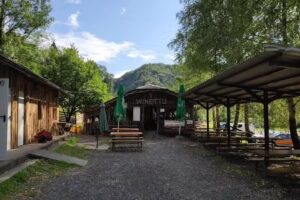
The Vrček snack bar, as the name suggests, was not a haute cuisine or fine dining restaurant. It was a classic snack bar, which in Slovenian terms means a simple, homely and affordable place. Such places are the heart of local social life, where people stop for a quick coffee, a drink after work or a specific snack . Given its location in the small village of Soviče, Vrček most likely served the local community. The sole proprietorship (sp) in the name indicates that it was a family business, where a personal approach and homeliness played a key role. In such establishments, a guest is not just a number, but an acquaintance, neighbor or friend.
The culinary offer in such establishments is usually focused on proven dishes that are close to the people. Although we do not have an exact menu, we can conclude with a high probability that homemade food was present on the menu. These are dishes such as goulash, beans, tripe, various stews, Viennese steak with potatoes, roasts with sauerkraut and, of course, the daily lunch offer. The emphasis was on filling and abundant portions at reasonable prices, which is key to attracting workers and craftsmen, who are often the main clientele of such catering establishments.
Advantages: Homeliness and simplicity
One of the greatest qualities of Okrepčevalnica Vrček was certainly its authenticity. At a time when many restaurants are resorting to modern trends, Vrček probably retained a touch of the past and tradition. These are the advantages that a potential guest could appreciate:
- Affordable prices: Compared to larger city restaurants, rural eateries are known for their affordable offerings. For a modest price, the guest gets a full plate of simple but delicious food.
- Personal approach: In a smaller, family-run establishment, the connection with guests is more genuine. The owner probably knew most of her customers by name, which creates a sense of belonging and familiarity that can't be found in larger chains.
- Authentic Slovenian cuisine: The restaurant was an opportunity to taste dishes prepared according to old, tried-and-tested recipes. Without unnecessary additives and complicated techniques - just honest Slovenian cuisine , based on high-quality, local ingredients.
- Peaceful environment: The location away from the hustle and bustle of the city allowed for a relaxed meal without noise or crowds. For someone looking to escape the stress of everyday life, this could be an ideal stopover.
Disadvantages: Challenges of small business
The fact that Okrepčevalnica Vrček is permanently closed is evidence that there were also challenges and shortcomings. These are not necessarily related to the quality of the offer, but are often a result of broader economic and social factors that small rural caterers face.
- Limited offerings: The small kitchen and limited resources likely meant that the menu was not overly extensive. Guests looking for variety or specific dishes (e.g. vegetarian, vegan) might not find much to their liking here. This is a common feature of traditional taverns .
- Business hours: Smaller establishments often have flexible opening hours that may not have been convenient for everyone. They may have been closed on certain days or times, which could have been a barrier to potential guests from elsewhere.
- Location: While a quiet environment is an advantage, it can also be a disadvantage. A remote location means less frequent visitors, so your business relies heavily on the loyalty of locals. Without a steady stream of new customers, it can be difficult to survive in the long run.
- Competition and modern trends: Despite the desire for tradition, consumer habits are changing. The rise of fast food, delivery services and modern bistros is a strong competitor for traditional eateries. Maintaining a business in such an environment requires constant adaptation, which can be a huge financial and time drain for a small entrepreneur.
Legacy and memory
Although Okrepčevalnica Vrček is no longer in business, its story remains an important reminder of the role that small, local inns and taverns play. They are not just places where good food is served; they are community hubs, guardians of tradition and an important part of Slovenian cultural heritage. Every closure of such a place means the loss of a part of local identity. For those who knew it, the memory of a place where they could enjoy authentic local food and chat in a relaxed atmosphere remains. For everyone else, its story is a reminder of how important it is to support local providers so that their stories can live on.