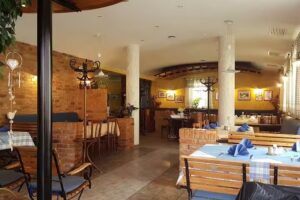
Catering services, Gregor Žula sp
BackIn the hilly landscape of Haloze, more precisely at the address Hrastovec 61 in the municipality of Zavrč, there once operated a catering establishment with the official name Gostinske storitve, Gregor Žula sp. For many locals and visitors, this place was synonymous with a stop along the way, a place to socialize or have a Sunday lunch. Today, however, visitors to this address are greeted by closed doors, as the business has permanently ceased. The company, registered in 2005, was deleted from the business register in the fall of 2018, bringing to an end more than a decade of operation.
Given the location and nature of such rural establishments in Slovenia, this was most likely a classic inn, based on offering home-cooked food . Although there are no detailed online reviews or archived menus available, which is often the case for smaller, family-run establishments that went out of business before the rise of digital platforms, we can conclude with great certainty about the type of culinary experience they offered. Haloze is known for its specific cuisine, which relies on ingredients from the local environment. Thus, at Gregor Žula it was likely possible to order dishes such as beef soup with homemade noodles, various roasts with side dishes, cold cuts with homemade meats, mushroom dishes in season and perhaps also some local specialty such as "haloška bunka".
The potential charm and challenges of a rural inn
Every restaurant or inn, especially one in the countryside, carries both strengths and weaknesses, which are often inextricably linked. Analyzing the performance of similar establishments can help us understand what likely attracted guests to Žula and what challenges they likely faced.
What probably impressed the guests?
The main advantage of such taverns was almost certainly authenticity. Guests were looking for the real taste of home-cooked food, prepared according to tried and tested, traditional recipes. In a world dominated by fast food, the experience of visiting a tavern where time stood still was invaluable.
- Authentic, delicious food : The main draw was probably the dishes that many people knew from childhood. Large portions, full flavors, and fresh ingredients were key factors that attracted guests looking for a Sunday lunch without having to cook at home.
- Homeliness and personal approach: In family-run pubs, as this one probably was, the owner often serves or cooks himself. This creates a personal bond with guests who feel welcome and valued. Conversation with the owner, recommendations of the day's dishes, and a relaxed atmosphere are an important part of the overall experience.
- Value for money: Countryside inns have traditionally been known for offering hearty meals at more affordable prices than restaurants in larger cities, attracting families and larger groups looking for a quality meal without breaking the bank.
- Connection to the local environment: Such an inn was more than just a place to eat; it was the center of social life in the town. It was where business was done, birthdays were celebrated, baptisms and confirmations were celebrated, and seventh-day parties were organized. In this way, the establishment performed an important social function in the community.
What problems did they probably face?
Despite its many advantages, operating in a rural environment also brings specific challenges that may have contributed to the decision to close. These challenges are common to many similar providers in the region and across Slovenia.
- Traffic fluctuations: Traffic in rural inns is often highly dependent on weekends, holidays and the season. During the week, there can be significantly fewer guests, which makes financial planning and inventory management difficult.
- Competition and changing habits: Although Haloze is less densely populated, the catering offer in the wider region has been developing. At the same time, the habits of people have changed, as they have become more mobile and are willing to travel further, perhaps to larger centers such as Ptuj, for culinary experiences .
- Staffing issues: Securing reliable and qualified staff (cooks, waiters) can be a major challenge in rural areas. Young people often move away, and interest in working in the hospitality industry is declining.
- Maintenance and modernization: Running a restaurant requires constant investment in equipment, renovation of premises, and compliance with legislative standards (e.g. hygiene). For a smaller family business, this can be a significant financial burden that is difficult to cover with unstable traffic.
Legacy and impact on local offerings
The closure of the Gregor Žula sp inn left a gap in the local community of Hrastovec and the wider Zavrče area. Each closed restaurant means one less opportunity to socialize, celebrate, and simply enjoy good food. For travelers exploring the Haloze hills, this meant the loss of a potential stopover and refreshment point. Although other catering providers still operate nearby, each with its own unique offering, the disappearance of an established name is always noticeable. The story of the Gregor Žula sp inn is thus a reminder of the fragility of rural catering and the important role that these establishments play in preserving both the culinary heritage and the social fabric of their community. Although the establishment is no longer operating, it remains in the memory of those who visited it during its operation.