
Plant
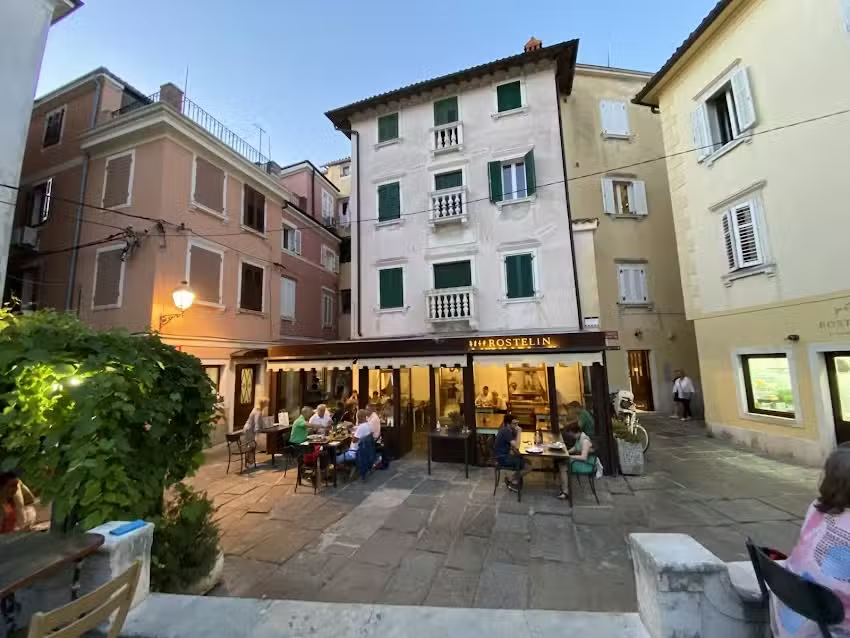
BackRostelin, located at Gallusova ulica 2 in Piran, was for many years one of the most recognizable and visited dining spots in this seaside town. With its high average rating of 4.7, obtained from more than 1600 reviews, it has earned a reputation as a place where guests like to return. Despite this popularity, the restaurant has permanently closed its doors, which came as a surprise to many regular visitors and connoisseurs of Piran's culinary scene. Its story is a story of success, but also reveals the pitfalls and pressures that popular restaurants in Piran face.
Rise and popularity: What attracted guests?
The core of Rostelin's success has been its focus on quality and authentic food. Many guests have praised it as a place where one can experience excellent home-cooked food with a Mediterranean twist. The handmade pasta in particular stood out. One customer described it as "the best home-made pasta around," a testament to the high standard it achieved. Other dishes, such as the risotto, have also regularly received praise. Guests have appreciated the simple yet effective approach to Slovenian cuisine , which emphasizes fresh ingredients and full flavors.
In addition to the food, the atmosphere also contributed to its popularity. The restaurant was considered homely, cozy and with its own story, which created a sense of authenticity. The friendliness of the staff was often highlighted as one of the key factors that made visitors feel welcome. For many, Rostelin was a reliable choice, a stop that offered a pleasant culinary experience on every visit to Piran. Moderate portions allowed for multiple courses, giving guests the opportunity to try a wider range of their offerings, which included both lunches and dinners as well as breakfasts.
The Other Side of the Coin: Criticisms and Inconsistencies
Despite the many accolades, Rostelin was not without its flaws. A closer look at the restaurant reveals that diners' experiences were sometimes very mixed. While some praised the dishes, others reported significant disappointments. One of the harshest reactions mentioned ravioli that was "swimming in oil," a stale dessert, and hard, tasteless bread. Such reviews point to a possible inconsistency in the preparation of the dishes, which is a significant shortcoming for a restaurant with such a high reputation.
The most severe criticism, however, concerned the attitude towards guests during peak times. In the summer, queues in front of the restaurant were a constant, which clearly created a lot of pressure on the staff and management. Several guests reported feeling like they were being dismissed as soon as possible in order to free up the table for the next person. In one of the notes, a guest described how the owner literally asked them to leave during dessert, saying that others were waiting. Such an attitude is completely contrary to the expectations of hospitality and greatly harms the entire experience. The attitude of some waiters, which was described as "below criticism", was also criticized, as was the charging for tap water, which left a bitter taste in the mouth of some guests.
Pressures of the tourist season
The experiences of guests clearly show the two faces of Rostelin. Outside the main season, it was easier to get a table and the experience was often more relaxed and authentic. In the summer, when Piran filled up with tourists, the system sometimes seemed to buckle under the pressure. Long waiting times were something regular guests were willing to accept, but when this led to a decline in the quality of service and food, satisfaction quickly declined. Rostelin's story is also a reminder of how difficult it is to maintain high standards in an extremely competitive and seasonally loaded environment.
Legacy and the end of the story
The fact that Rostelin is permanently closed leaves a void in Piran's culinary scene. For many, it will be remembered as a place of excellent pasta Piran and authentic seafood , where they spent pleasant moments. For others, it will serve as an example of how great popularity and a focus on fast turnover can negatively affect the core values of hospitality - quality, hospitality and respect for the guest. Its legacy is complex and serves as a case study in the ups and downs of the world of gastronomy, where there is a fine line between success and overcrowding.